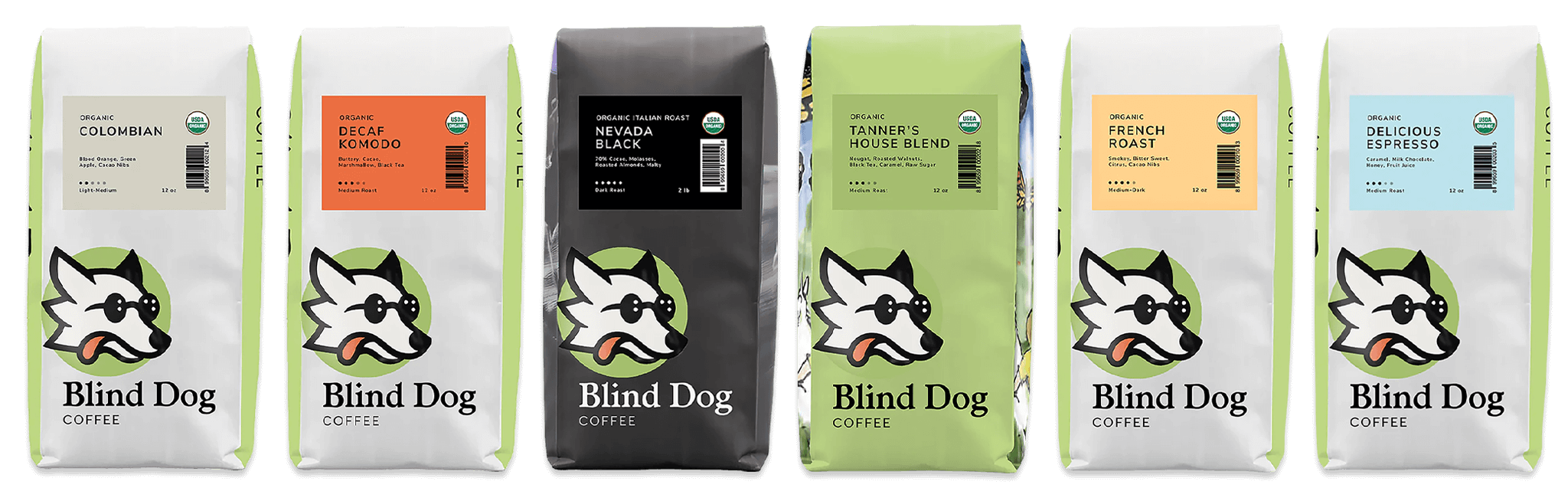
At Blind Dog Coffee, we’ve found that the Swiss Water® Process generally produces the lowest-acid decaf coffee. It removes caffeine using only water, temperature, and time—without chemical solvents—while preserving natural sweetness and balance. The result is a smoother, gentler cup that’s easier on the stomach.
Why the Decaf Method Matters for Acidity
Many people switch to decaf hoping for a gentler coffee experience—only to discover that decaf can still feel acidic or cause stomach discomfort.
That’s because:
- Caffeine isn’t the only compound that affects acidity
- The decaffeination method itself plays a major role in flavor balance and how your body responds
At Blind Dog Coffee, we care about how coffee makes you feel—not just how it tastes. Understanding how coffee is decaffeinated is essential to choosing a truly low-acid decaf.
What Causes Acidity in Decaf Coffee?
Coffee acidity comes from naturally occurring compounds such as:
- Chlorogenic acids
- Quinic acid
- Organic fruit acids
Decaffeination does not automatically remove these acids. In fact, aggressive extraction methods can sometimes increase harsh or sour characteristics, even after caffeine is removed.
That’s why the decaf method matters just as much as roast level and brewing style.
The Main Decaf Methods (Ranked by Acidity)
Swiss Water® Process (Lowest Acid – Best Overall)
How it works
- Uses only water, temperature, and time
- No chemical solvents
- Caffeine is dissolved and filtered out while flavor compounds remain intact
Why it’s lowest in acid
- Gentle extraction preserves natural sugars
- Minimizes harsh or bitter compounds
- Produces a smooth, balanced cup
Best for
- Sensitive stomachs
- Acid reflux concerns
- Daily decaf drinkers
Blind Dog Coffee Note
We use the Swiss Water® Process for our low-acid decaf selections because it aligns with our commitment to smooth, drinkable coffee without sacrificing flavor.
Pros & Cons
- Lowest perceived acidity
- Clean, chemical-free process
- Slightly higher cost
CO₂ (Carbon Dioxide) Process (Low to Medium Acid)
How it works
- Uses pressurized carbon dioxide to selectively remove caffeine
Acidity impact
- Preserves flavor clarity and structure
- Can retain some bright or crisp notes
Best for
- Balanced flavor profiles
- Espresso-friendly decaf
Blind Dog Coffee Note
CO₂ decaf sits between Swiss Water and chemical methods—it’s cleaner than solvent-based processes, but not as gentle as Swiss Water when acidity is the top concern.
Pros & Cons
- Clean extraction
- Slightly brighter acidity than Swiss Water
Ethyl Acetate (EA / “Sugarcane”) Process (Medium Acid)
How it works
- Uses ethyl acetate to bond with caffeine
- Often marketed as “naturally decaffeinated”
Acidity impact
- Preserves fruity and aromatic qualities
- Can leave sharper acids more noticeable
Best for
- Light roasts
- Fruit-forward cups
Pros & Cons
- Medium perceived acidity
- Less consistent for sensitive stomachs
Methylene Chloride Process (Highest Acid Risk)
How it works
- Uses a chemical solvent to extract caffeine
- Common in mass-market decaf coffees
Acidity impact
- Can disrupt natural flavor balance
- Often results in sharper, bitter notes
Best for
- Cost-driven, large-scale production
Pros & Cons
- Highest perceived acidity
- Least gentle on digestion
Decaf Method Comparison: Acidity, Flavor & Feel
Swiss Water® Process
- Perceived acidity: Lowest
- Chemical solvents: None
- Flavor profile: Smooth, naturally sweet, well-balanced
- Best for: Sensitive stomachs, acid reflux, low-acid decaf drinkers
CO₂ (Carbon Dioxide) Process
- Perceived acidity: Low to medium
- Chemical solvents: None
- Flavor profile: Clean, structured, slightly bright
- Best for: Espresso decaf and balanced flavor lovers
Ethyl Acetate (EA / Sugarcane) Process
- Perceived acidity: Medium
- Chemical solvents: Yes (ethyl acetate)
- Flavor profile: Fruity, bright, expressive
- Best for: Light roasts and fruit-forward cups
Methylene Chloride Process
- Perceived acidity: Highest
- Chemical solvents: Yes
- Flavor profile: Often flat or bitter
- Best for: Budget-focused, mass-market decaf
Final Verdict: What’s the Lowest-Acid Decaf Coffee?
If your priority is the smoothest, lowest-acid decaf possible, the answer is clear:
Swiss Water® Process decaf is the gentlest and most stomach-friendly option available.
For best results, pair it with:
- A medium or darker roast
- Brewing methods like French press or cold brew
This combination minimizes perceived acidity and maximizes sweetness—making decaf enjoyable any time of day.